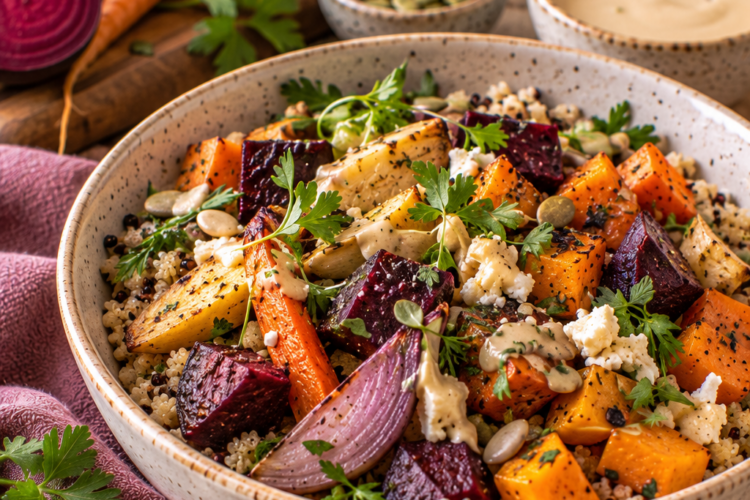
“Warm, grounding nourishment that steadies the body and soul.”
Earthy, colourful, and deeply comforting, this Root Veggie and Grain Bowl is the kind of meal that feels especially good when you’re craving something substantial without wanting anything complicated. It’s warm and hearty, but still fresh. Simple, but far from boring. And every spoonful seems to bring a slightly different combination of flavours and textures.
The heart of the bowl is a generous layer of chewy whole grains topped with root vegetables roasted until tender, caramelized, and beautifully golden around the edges. Roasting brings out their natural sweetness in the loveliest way. Those deeper, almost toasty flavours settle into the grains below, while fresh herbs wake everything up with a little brightness.
Then comes the dressing, making everything feel soft and cozy. Something lemony or tangy adds contrast to the sweetness of the roasted vegetables. A drizzle of tahini can bring a rich, nutty finish. There’s no single right direction here, which is part of what makes a grain bowl like this so useful. Work with what you have. Taste as you go. Add a little more of whatever sounds good that day.
Whole grains and vegetables naturally bring fiber and a variety of plant-based nutrients to the bowl, making it a nourishing option for lunches and dinners alike. It’s also wonderfully practical for meal prep. Roast a generous tray of vegetables, cook your grains ahead of time, and you have the beginnings of several satisfying meals waiting in the fridge.
Sometimes that’s exactly the kind of meal you want.
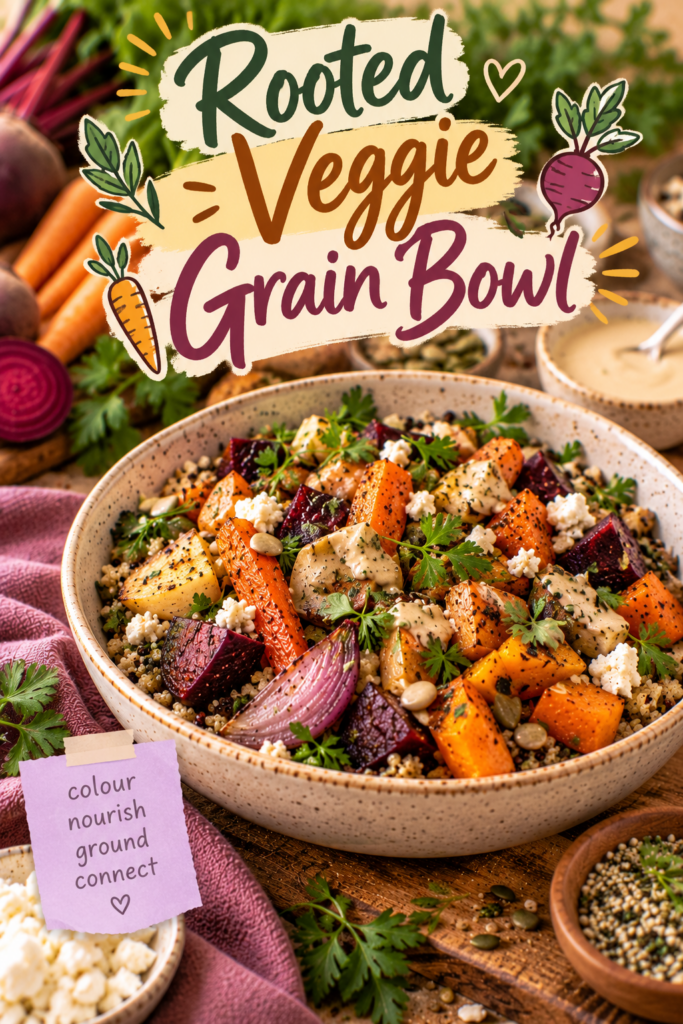
🌿 Why This Root Veggie and Grain Bowl Supports Body-Based Healing 🌿
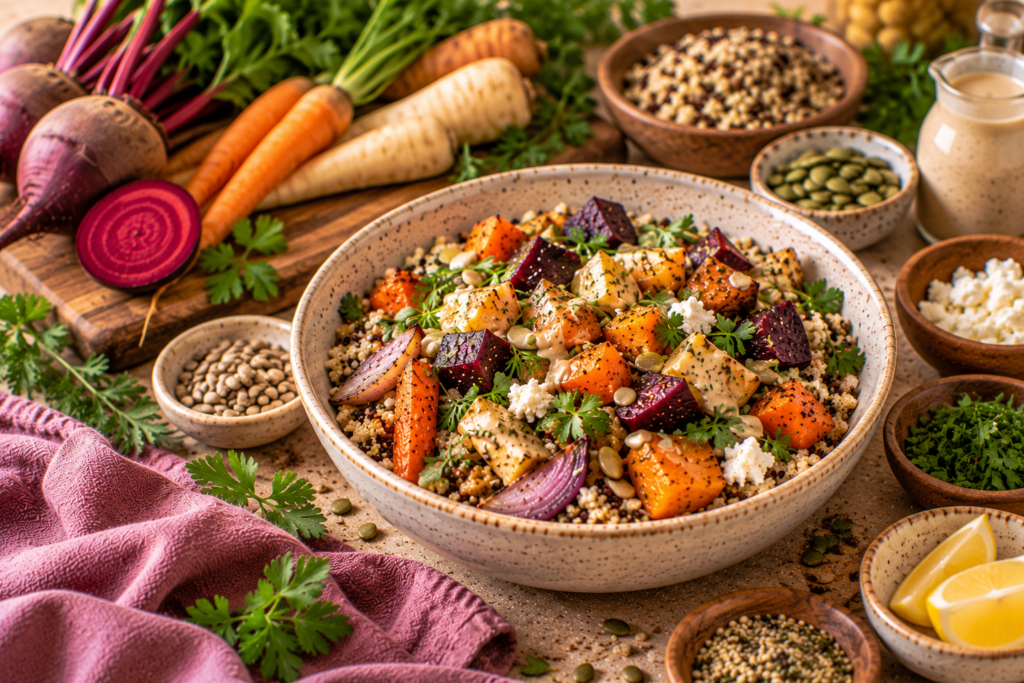
Quinoa = Steady Energy, Protein & Grounding Nourishment. Quinoa offers a beautifully balanced source of plant-based nourishment, providing the body with essential nutrients that support sustained energy, strength, and overall wellbeing. Naturally rich in complex carbohydrates, fiber, and complete protein, quinoa contains all nine essential amino acids, helping support muscle repair, tissue maintenance, and lasting fullness. It also provides magnesium, iron, folate, phosphorus, and manganese, important nutrients that contribute to healthy blood cells, bone strength, energy metabolism, and normal nervous system function. Its combination of fiber and protein helps promote more balanced blood sugar levels and steady energy throughout the day, supporting the nutritional foundations of concentration and everyday vitality. Naturally gluten-free, mild in flavour, and wonderfully versatile.
Carrots = Vision Support & Grounding Energy. Carrots offer a naturally sweet, colourful source of nourishment that supports the body with essential vitamins, minerals, fiber, and protective plant compounds. Particularly rich in beta-carotene, which the body converts into vitamin A, carrots help support healthy vision, immune function, skin health, and normal cellular growth. Their antioxidants, including carotenoids, help protect cells from oxidative stress, while their dietary fiber gently supports digestion, gut health, and lasting fullness. Carrots also provide potassium and vitamin K1, contributing to normal muscle function, healthy blood pressure, and bone health. Bright, grounding, and wonderfully versatile, they bring gentle nourishment to everyday meals while supporting eye health, digestion, immunity, and overall vitality.
Beets = Detoxifying & Circulation-Supportive. Beets offer a vibrant, nutrient-rich source of nourishment that supports the body with a beautiful balance of vitamins, minerals, fiber, and protective plant compounds. Naturally rich in dietary nitrates, beets help the body produce nitric oxide, which supports healthy blood flow, circulation, and cardiovascular function. Their deep ruby-red colour comes from betalains, powerful antioxidant pigments that help protect cells from oxidative stress and may support the body’s natural inflammatory response. Beets also provide folate, potassium, manganese, and fiber, contributing to healthy cell development, normal muscle and nerve function, digestive health, and overall vitality. Their naturally occurring carbohydrates provide accessible energy, while their fiber helps promote lasting fullness and balanced nourishment.
Sweet Potatoes & Parsnips = Sustained Energy & Gut Health. Sweet potatoes are particularly rich in beta-carotene, which the body converts into vitamin A to support healthy vision, immune function, and skin health, while also providing potassium and vitamin C for normal muscle function and cellular protection. Parsnips contribute valuable fiber, folate, vitamin C, and potassium, helping nourish beneficial gut bacteria, support healthy digestion, and maintain normal heart and nervous system function. Together, their complex carbohydrates provide satisfying energy, while their fiber helps promote lasting fullness and more balanced blood sugar responses when enjoyed as part of a nourishing meal. Roasting brings out their natural sweetness, creating tender, caramelized textures that feel warm, familiar, and comforting.
There’s a particular kind of tenderness in making a bowl of food for someone you know well. Not just feeding them, but building the meal around all those little preferences you’ve somehow memorized along the way. This Root Veggie and Grain Bowl lends itself beautifully to that kind of care because every layer can quietly become personal.
Maybe you know they always reach for the caramelized pieces of roasted sweet potato first, so you make sure a few extra golden-edged pieces find their way into their bowl. Perhaps they love plenty of fresh herbs, want their grains extra chewy, or insist that the dressing should be generous enough to reach every last bite at the bottom.
So much of knowing another person is built from details that would seem insignificant to anyone else. How they take their coffee. Which side of the bed they prefer. What makes them laugh when they’re tired. Which vegetables mysteriously remain on the plate and which ones disappear before everything else. Over time, these tiny observations become familiar knowledge, and food gives us a wonderfully ordinary place to put that knowledge into practice.
You might assemble one and leave it in the fridge for someone coming home late. Pack another for a busy day when you know lunch might otherwise be forgotten. Save the crispiest roasted vegetables because you know who loves them. Keep the dressing separate because that’s how they prefer it. None of these gestures are particularly grand, and that’s precisely what makes them feel so intimate.
Sometimes affection arrives as a beautifully wrapped gift or carefully chosen words.
And sometimes it arrives in your favourite bowl, with the good roasted pieces tucked on top and a little extra dressing because someone remembered that’s exactly how you like it.
💛 Attachment & Relational Connections 💛
Connection Through Shared Preparation.
Give everyone a safe, meaningful role. Children can “paint” vegetables with olive oil, measure cooled ingredients, whisk dressing, choose toppings, or assemble their own bowls while an adult manages chopping and the hot oven. Working alongside one another reinforces: “We each have something meaningful to contribute.”
Choice = Autonomy.
A build-your-own bowl naturally creates opportunities for meaningful choice. Try asking: “Which vegetables would you like in your bowl?” “Would you like a little dressing, more, or none?” “Would you like your ingredients together or separate?” “Which topping would you like?” “Would you like help or would you like to do it yourself?” Choice communicates: “Your preferences and boundaries matter.”
Co-Regulation = Finding a Rhythm Together.
Whisking, arranging, and assembling can become shared rhythmic activities. Try: Taking turns whisking. Counting vegetables together. Matching slow stirring movements. Working quietly side by side. Pausing together before sitting down to eat. Connection doesn’t always require conversation. Coordinated activity can offer its own experience of togetherness.
Attunement = Being Seen.
Notice how each person approaches the meal without expecting everyone to participate in the same way. You might say: “You seem really interested in arranging the colours.” “That tahini flavour seems strong for you.” “I noticed you prefer your vegetables separate.” “You’d like more grains today.” “It looks like your body is telling you you’ve had enough.” Attunement communicates: “I notice you and care about your experience.”
Differences = Belonging Without Sameness.
Once everyone has assembled their bowl, notice how different they look. You might say: “Your bowl doesn’t need to look like mine.” “You chose carrots and I chose beets.” “We can like different things.” “There’s more than one way to make a bowl.” “All of our bowls belong at the same table.” The relational message becomes: “We can be different and remain connected.”
Repair = Reconnection After Frustration.
A bowl may spill, someone may take the last carrot, or a child may dislike something they chose. Try: “That didn’t go the way you wanted.” “We both wanted the same thing. Let’s figure it out.” “You can change your mind.” “I got frustrated for a moment. I’m ready to try again.” “We can clean this up together.” Repair communicates: “Difficult moments can happen, and we can find our way back to one another.”
Sensory Exploration = Trust.
A bowl containing many colours, smells, and textures may feel exciting to one person and overwhelming to another. Offer options such as: Keeping ingredients separate. Serving dressing on the side. Exploring one vegetable at a time. Smelling or touching an unfamiliar food without tasting it. Including a familiar food alongside something new. Respecting sensory boundaries communicates: “You can listen to your body and still belong at our table.”
Shared Snack Ritual = Belonging.
Once everyone has assembled their meal, place the bowls together and notice how each one reflects a different person. Invite everyone to share, if they wish: One ingredient they chose. One colour they especially like. One thing they enjoyed helping with. One thing they appreciated about someone’s help. One thing their body is asking for today. Keep participation relaxed and optional. The repeated relational message is: “I can choose. I can be different. I can contribute. I can give and receive care. There is a place for me here.”
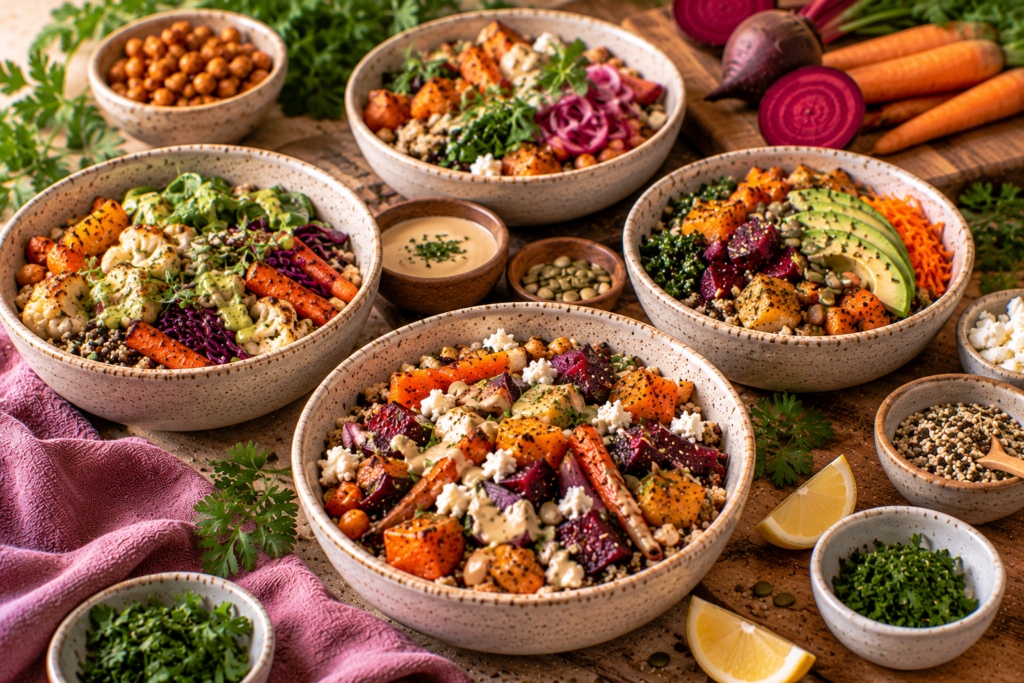
There’s something wonderfully connecting about a meal that invites everyone to gather around and make it their own. A Root Veggie and Grain Bowl does exactly that. Instead of arriving at the table perfectly assembled and finished, the ingredients can be spread out in generous bowls and platters: warm grains, caramelized root vegetables, handfuls of fresh herbs, something crunchy, and a favourite dressing waiting to be passed around.
Meals like this leave room for people to participate rather than simply sit down and eat. There’s passing, scooping, reaching, tasting, and the inevitable, “Can you send that back this way?” The food keeps moving around the table, and conversation seems to move with it.
That’s often where connection finds its way in.
Maybe it’s a weeknight dinner when everyone has finally landed in the same room after a long day. Maybe friends have come over and nobody is particularly interested in making the evening formal. Or perhaps it’s a slow weekend meal where people keep talking long after their bowls are mostly empty, occasionally reaching for one last roasted carrot or another spoonful of grains while the conversation wanders somewhere completely unexpected.
Those moments don’t need much arranging. In fact, some of the best ones happen when nobody is trying particularly hard to create them.
Connection Prompts
Simple reflections to check in with yourself or share with those you are cooking alongside. This helps with grounding and keeping you in the present moment. Feel free to choose one or all, listen to your body and what is needed in this present moment.
While Preparing:
“Which vegetable changes the most while roasting?”“What smells are beginning to fill the kitchen?”
“How does the tahini change while we whisk it?”
Kid-Friendly Prompts:
“If each vegetable had a personality, what would it be like?”“Can you make a rainbow or picture inside your bowl?”
“If your bowl had a magical name, what would you call it?”
“Which vegetable would make the best superhero, and what would its power be?”
While Eating:
“What do you notice first? Sweet, earthy, creamy, chewy, soft, or something else?”“Which vegetable tastes sweetest after roasting?”
“How does the tahini dressing change the other flavours?”
“How does your body let you know whether it wants more or has had enough?”
🌺 Aromatherapy Notes – Using Scent as an Anchor 🌺
Grounding practices can be incredibly beneficial, especially when preparing and sharing food. As you cook, consider taking a moment to reflect on your thoughts and feelings. This can help centre your mind and body, allowing you to fully engage with the cooking process. Reflecting on the ingredients and their journey from earth to plate can foster a deeper appreciation for your food and enhance your overall dining experience.
- Caramelized Roots – Sweet, Earthy and Comforting – There’s a deep, earthy sweetness to the aroma of caramelized root vegetables; warm, rustic, and gently comforting, like the familiar embrace of a slow, home-cooked meal. While roasting root vegetables isn’t traditionally considered aromatherapy, their rich, naturally sweet fragrance can offer a grounding sensory experience, inviting the mind to slow down and settle into the present moment. As carrots, parsnips, sweet potatoes, and beets slowly caramelize, their earthy notes soften into a warm, almost buttery sweetness, filling the kitchen with a sense of coziness, nourishment, and anticipation. The gentle sizzle of roasting, the changing colours, and the deepening aromas create a comforting multisensory ritual that encourages patience and mindful awareness. Caramelized root vegetables invite you to pause, breathe in their golden warmth, and reconnect with the simple pleasures of seasonal abundance, sensory grounding, and feeling nourished from within.
- Rosemary & Thyme – Herbal and Grounding, Evoking Steadiness – There’s a beautiful harmony in the aroma of rosemary and thyme; woodsy, earthy, and gently invigorating, like wandering through a sun-warmed herb garden where the air carries the quiet freshness of nature. In aromatherapy, rosemary’s crisp, pine-like fragrance is often associated with mental clarity, alertness, and renewed focus, while thyme’s softer, herbaceous warmth brings a sense of steadiness, comfort, and grounding. Together, their complementary scents create a sensory experience that feels both refreshing and reassuring, offering a gentle balance between awakening the senses and settling into the present moment. As these fragrant herbs warm alongside roasted vegetables, olive oil, or comforting grains, their aromas deepen and mingle with the earthy sweetness of the food, filling the kitchen with warmth and familiarity. Whether gently rubbed between your fingertips or scattered over a nourishing meal, rosemary and thyme invite you to pause, breathe in their garden-fresh fragrance, and reconnect with a quiet moment of clarity, connection, and grounded calm.
- Lemon – Bright, Cleansing and Uplifting – There’s a bright, sun-kissed freshness to the aroma of lemon; crisp, vibrant, and gently uplifting, like a little burst of sunshine awakening the senses. In aromatherapy, lemon’s lively citrus fragrance is often associated with mental clarity, renewed energy, and a lighter, more positive mood, offering a refreshing sensory experience when the mind feels tired or overwhelmed. As lemon is sliced, zested, or gently squeezed, its aromatic oils release a clean, invigorating scent that can invite curiosity, mindful breathing, and a renewed connection to the present moment. Its cheerful brightness beautifully complements the warmth of roasted vegetables, fragrant herbs, and comforting homemade meals, creating a balance between freshness and grounding familiarity. Lemon invites you to pause, breathe in its sunny freshness, and reconnect with a small moment of clarity, lightness, and sensory renewal.
Inhale deeply as the roasted veggies come out of the oven and say quietly:
“I am rooted. I am steady. I am nourished.”
Inner Child Activity: “Rooted & Nourished”
Optional activity to connect with your inner child or to have some fun in the kitchen with your mini chefs!
Exploring inner comfort, memory, and emotional nourishment.
As you enjoy this Root Veggie and Grain Bowl, reflect on what helps you feel grounded and supported. Draw a simple root system beneath the soil, filling each root with colours, words, or symbols representing the people, practices, values, and places that give you strength. Let your artwork remind you of the foundations that nourish you from within.
🎨 Prompt: “What keeps me rooted when life feels uncertain or busy?”
Somatic Integration Practice
After enjoying your bowl, find a comfortable position. Allow your hands to rest wherever they naturally settle. Notice the support underneath your body. Take a gentle breath in and allow an easy, unhurried breath out. Notice whether any flavours or sensations remain, the sweetness of the roasted vegetables, brightness of lemon, creaminess of tahini, or warmth of the grains. Now notice one place where your body feels supported, one sensation that feels comfortable or neutral, and one sound around you. If you’d like, notice whether your body feels different from before the meal. Perhaps warmer, fuller, steadier, or simply the same. Silently (or aloud) say:
“I can notice what I need. I can make choices that feel right for me. I am nourished, supported, and connected.”
Invite children to choose one word describing how they feel: (warm • grounded • calm • colourful • strong • satisfied • curious • energized). There is no right answer. The invitation is simply to notice.
After Meal Reflection
Offer yourself an optional soft check-in to honor how the meal felt in your body and nervous system.
Adult Journal Prompt:
Did the grounding quality of roots shift how I feel in my body?Child Prompt:
Draw the roots as if they were people, what are they doing?
As you sit in stillness, reflect on the nourishment you’ve just enjoyed. Each bite was not just sustenance but a moment of care for your body and mind. Embrace the sensations within you; perhaps a gentle warmth spreads throughout, or a sense of fullness brings comfort. Invite an openness to whatever feelings arise, recognising that this meal has contributed to your wellbeing in its own unique way. How does your heart feel? What thoughts come to mind as you allow yourself to settle in this moment of gratitude?
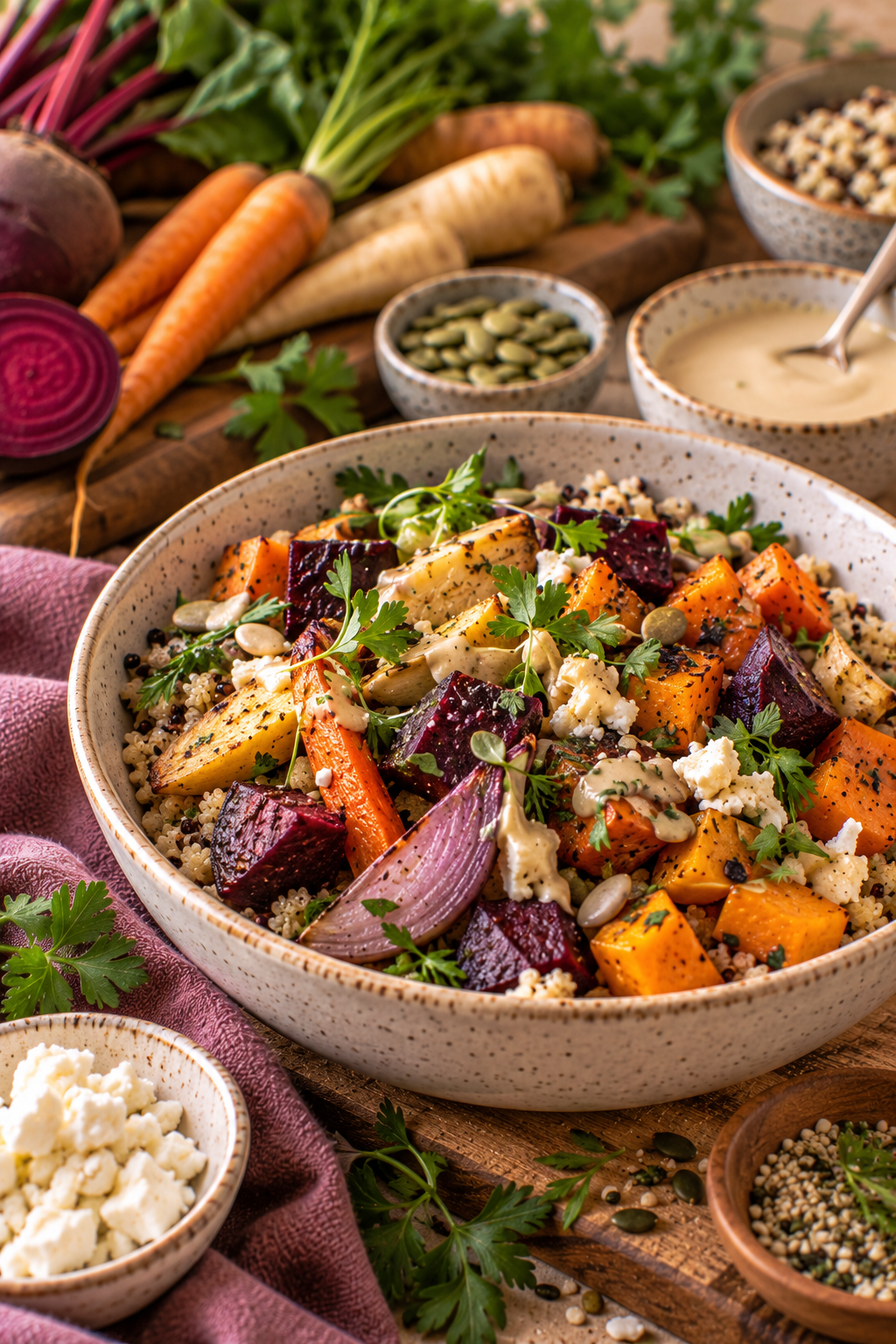
Rooted Veggie Grain Bowl
Ingredients
Method
Prepare Roots with Care:
Preheat the oven to 200°C (400°F). Place the chopped carrots, beet, sweet potato, and parsnip on a baking sheet. Drizzle with the olive oil, add in the herbs, salt, and pepper, and toss gently to coat. Spread into an even layer.🌿 Mindful Moment: Notice the different colours, shapes, and textures of the root vegetables. As you coat them with oil, watch how their colours become brighter and more vivid.🧒 Kid Prompt: “Can you ‘paint’ the vegetables with olive oil? Which colour would you choose if these veggies were your paint palette?”💬 Reflective Prompt: “What colours or small details bring a little brightness into your day?”Roast with Patience:
Roast the vegetables for approximately 25 to 30 minutes, turning halfway through, until tender and caramelized around the edges.Safety Note: An adult should manage the hot oven and baking sheet.🌿 Mindful Moment: As the vegetables roast, notice how the aroma gradually changes. Look for signs of transformation, the deepening colours, golden edges, and softer centers.🧒 Kid Prompt: “Which vegetable do you think will change the most in the oven?”💬 Reflective Prompt: “What helps you stay patient when something worthwhile needs time?”Cook the Grains:
While the vegetables are roasting, prepare the quinoa, farro, or rice according to the package directions. Once cooked, fluff gently with a fork.🌿 Mindful Moment: Notice how the grains change as they cook. Observe their size, texture, and aroma before and after cooking.🧒 Kid Prompt: “What do the cooked grains remind you of? Tiny clouds, pebbles, seeds, or something else?”💬 Reflective Prompt: “What small changes do you notice when you give something your attention over time?”Whisk the Dressing:
In a small bowl, whisk together the tahini and lemon juice. Add in the warm water gradually until the dressing becomes smooth, creamy, and pourable. Season as desired.🌿 Mindful Moment: Watch the tahini change as you whisk. It may thicken before becoming silky and smooth. Notice the rhythm of your hand and the gradual transformation in the bowl.🧒 Kid Prompt: “Can you make slow circles with the whisk? What happens to the dressing as you keep stirring?”💬 Reflective Prompt: “What helps you stay with something when it doesn't come together immediately?”Assemble Mindfully:
Divide the cooked grains among bowls. Add the roasted root vegetables on top, drizzle with the tahini dressing, and finish with your chosen toppings.🌿 Mindful Moment: Notice the different colours sharing the same bowl. Arrange the ingredients in whatever way feels appealing, there is no single right way to build it.🧒 Kid Prompt: “Can you make a rainbow, pattern, garden, or picture with the vegetables?”💬 Reflective Prompt: “What does it feel like to make something in your own way?”Eat with Presence:
Sit together and take the first bite slowly, noticing the combination of warm grains, caramelized vegetables, and creamy dressing.🌿 Mindful Moment: Before eating, notice the colours and aroma. With your first bite, become curious about temperature, flavour, and texture without needing to decide whether anything is “good” or “bad.”🧒 Kid Prompt: “What do you notice first, sweet, creamy, warm, chewy, soft, or something else?”💬 Reflective Prompt: “What becomes easier to appreciate when you slow down?”
Nutrition
Notes
Tips & Tricks
- Even Roasting – Cut the vegetables into similar-sized cubes for consistency.
- Deeper Flavour – Drizzle with balsamic vinegar before roasting.
- Protein Boost – Add in some chickpeas, lentils, or grilled chicken.
Storage & Serving
Fridge: Store roasted veggies and grains separately in an airtight container up to 4 days. Reheat: Warm in an oven or skillet with a splash of water or broth. Freeze: Not recommended, as the grains loose their texture when thawed.Variations
- Mediterranean – Add in some olives, feta, and parsley.
- Asian-Inspired – Drizzle with some sesame oil and top with scallions.
- Spiced Roots – Toss with some cumin, paprika, or curry powder before roasting.
Drink Recommendations
Family Friendly- Warm Lemon Water – cleansing and grounding.
- Chamomile Tea – calming alongside earthy flavours.
- Pinot Noir – earthy wine to complement root vegetables.
- Spiced Cider with Whiskey – warming and grounding.